
Homes and residences
Add a deterrent above suitable exposed walls and boundary sections, alongside secure gates, door and motion detection, cameras or residential guarding.
Electric fencing within a home security system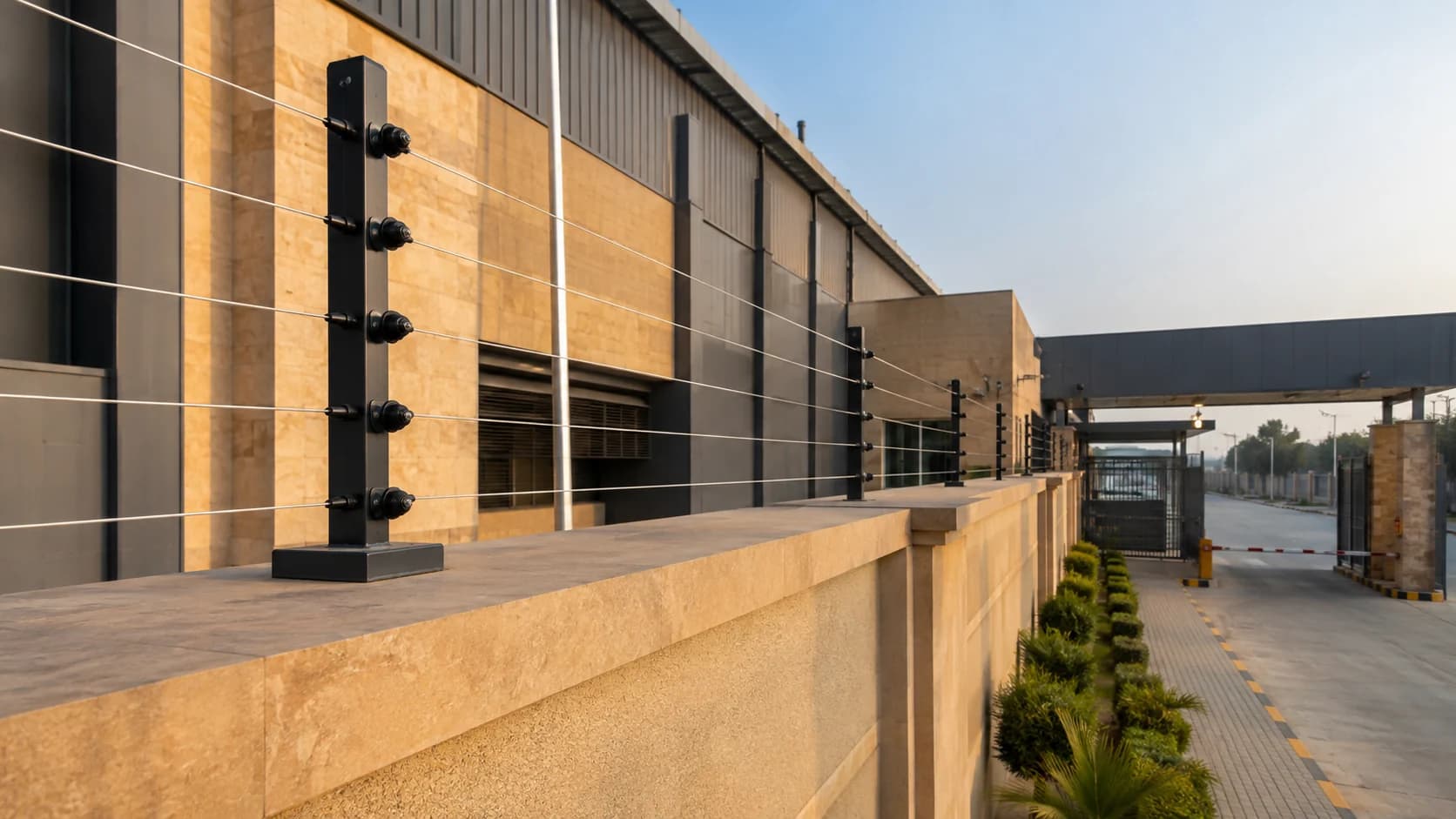
Add a visible deterrent where someone could try to cross a suitable wall or fence. Alzarar assesses the boundary, gates and surroundings before recommending an installation.
An electric security fence uses an energizer to send short electrical pulses through wires mounted on insulated supports at a suitable boundary. Its visible presence is intended to discourage contact and climbing.
The installation can complement secure gates, CCTV, intrusion detection and guards by adding a measure at the perimeter. It does not make a property impenetrable, and it cannot replace the access and response procedures used inside the site.
Suitability depends on the wall or fence, its surroundings and the way people use nearby areas. Alzarar assesses those conditions before setting out the proposed coverage.
The system should be professionally installed and maintained for the site. Occupants, staff and visitors should be warned not to touch or attempt to test the energised wires themselves.
The same boundary measure can serve different sites, but its surroundings and daily use always need to be considered.
Add a deterrent above suitable exposed walls and boundary sections, alongside secure gates, door and motion detection, cameras or residential guarding.
Electric fencing within a home security systemAssess the boundary around a shop, office or other business site where after-hours access is a concern. Gates, customer areas and nearby public access remain part of the planning.
Security for small businessesConsider longer boundary sections, vehicle gates, loading activity and the relationship between perimeter deterrence, guarding, CCTV and the site’s access procedures.
Enterprise perimeter planningThe powered equipment and fence wires rely on a suitable physical boundary and an operating arrangement the client understands.
The energizer supplies the short electrical pulses used by the fence. Its power and operating arrangement form part of the proposal for the site.
Conductive wires are held by insulated supports above or along suitable boundary sections. Corners, changes in level and the supporting surface affect their arrangement.
The wall or fence supports the installation, while pedestrian and vehicle gates require separate treatment so authorised access can continue.
The handover explains normal operation, available indication and how a suspected fault should be reported for the selected equipment.
A site visit identifies where fencing may be suitable and where a gate, neighbouring area or weak boundary needs separate attention.
The supporting wall or fence must be assessed for the proposed installation. Its height, condition, corners and changes in level affect the work required.
Vehicle and pedestrian gates interrupt the boundary and need to remain usable. The survey considers how authorised entry and everyday operation fit the fence arrangement.
Nearby public access, adjoining property and vegetation can affect suitability and upkeep. These conditions need to be understood before recommending fencing.
The energizer, available power and any required indication or reporting are part of the system. The proposal should explain what the selected arrangement includes.
We inspect the boundary, gates, surroundings, access requirements, power and any existing perimeter equipment.
The recommendation identifies suitable boundary sections, the proposed equipment, installation work and any areas that need separate treatment.
The team installs the agreed supports, wires and energizer arrangement, then checks operation across the sections included in the scope.
The client is shown everyday operation, fault reporting and the inspection or upkeep needed for the selected installation.
A perimeter installation remains exposed to weather, vegetation and activity near the boundary. The handover should explain routine observation, vegetation clearance, fault reporting and the maintenance arrangement for the selected equipment.
Fencing is a deterrent rather than a guarantee against entry. Coverage is limited to the installed sections, and gates or other openings still need appropriate access controls. Available power, fault indication and any connection to another system depend on the agreed design.
Faults or suspected damage should be reported through the agreed support route. Users should not touch or self-test an energised installation.
Compare technical security systemsNo. The supporting wall or fence, gates, nearby public access, vegetation and surrounding property need to be assessed. The survey identifies suitable sections and any areas requiring another measure.
It serves a different purpose. Fencing adds a perimeter deterrent; an alarm detects configured events; cameras record covered areas; and guards apply access and observation duties. A property may use one service or combine them.
Gates and authorised access need separate planning because they interrupt the boundary and move during daily use. The proposed arrangement should explain how each gate is treated.
Yes. Exposed wires, supports, vegetation and power equipment need observation and upkeep. The handover should explain what the client checks, how faults are reported and what maintenance support is included.
No. It is intended as a visible deterrent at suitable installed boundaries. It does not make a property impenetrable and should be considered alongside gates, detection, cameras, lighting and response arrangements.
Use CCTV to record selected boundary and gate views, an intruder alarm for configured detection, or guards for access and observation duties. The technical security overview explains how the systems differ.
Tell us about the wall or fence, gates and the areas that concern you. Our team will inspect the site and explain whether electric fencing is suitable for the proposed sections.